
Last updated September 10, 2026
Full 25-point door and opener safety check with every visit - springs, cables, rollers, tracks, and your LiftMaster or Chamberlain opener included
You get a price before we start. It does not change when the truck arrives.
 Before
 After
After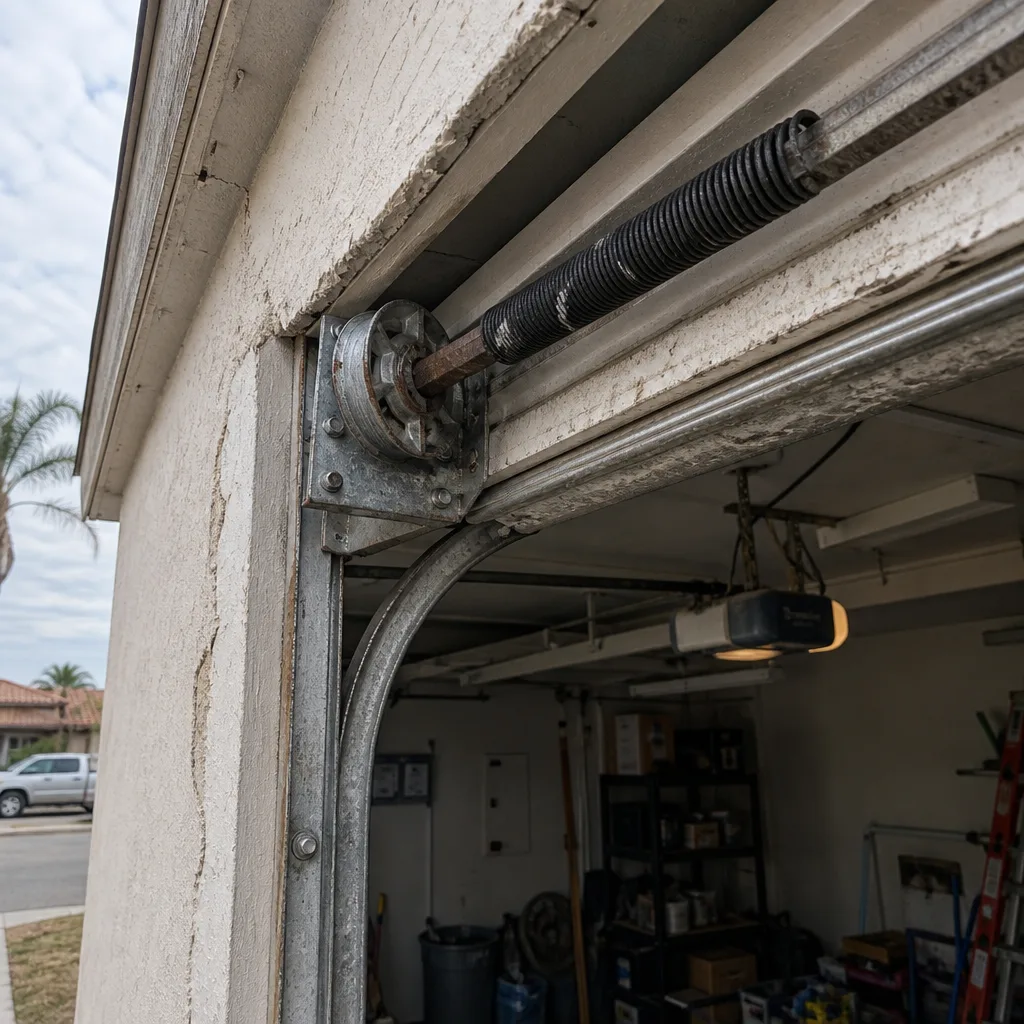 Before
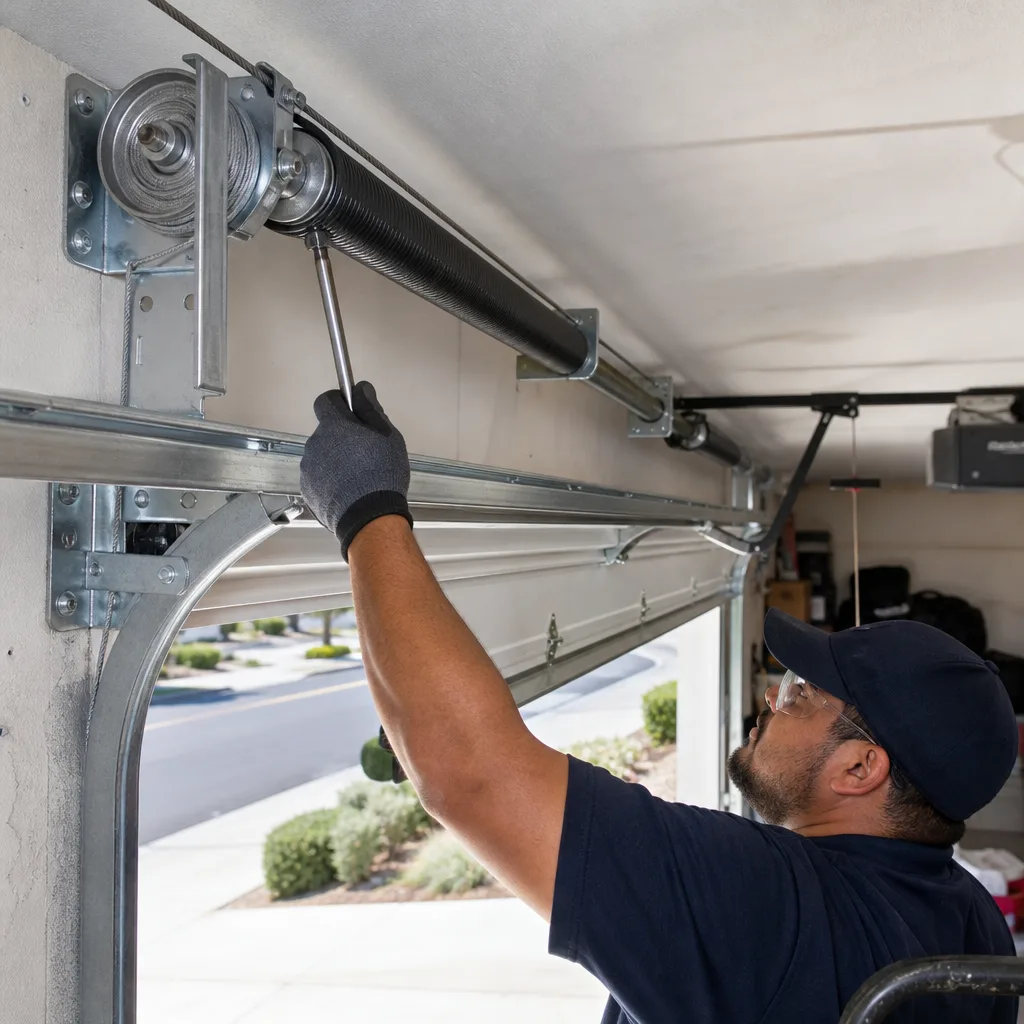 After
After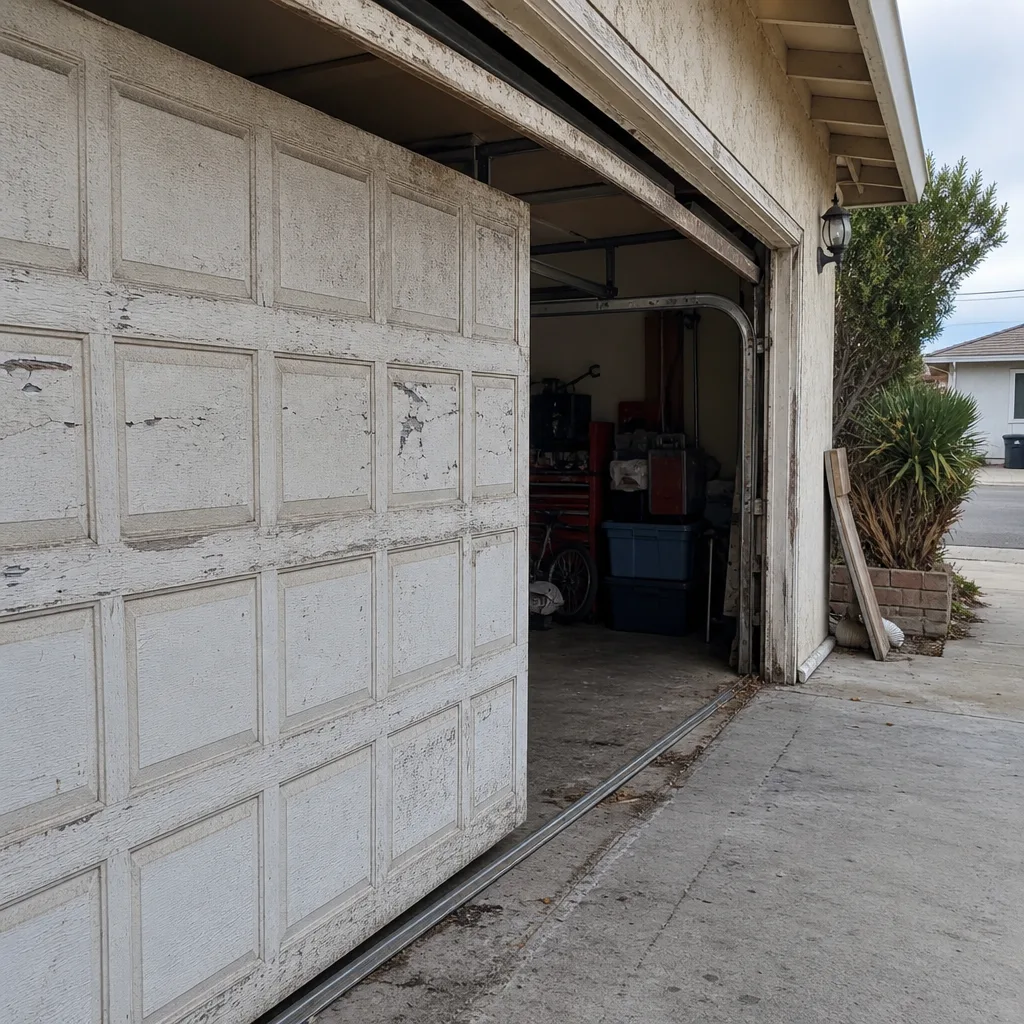 Before
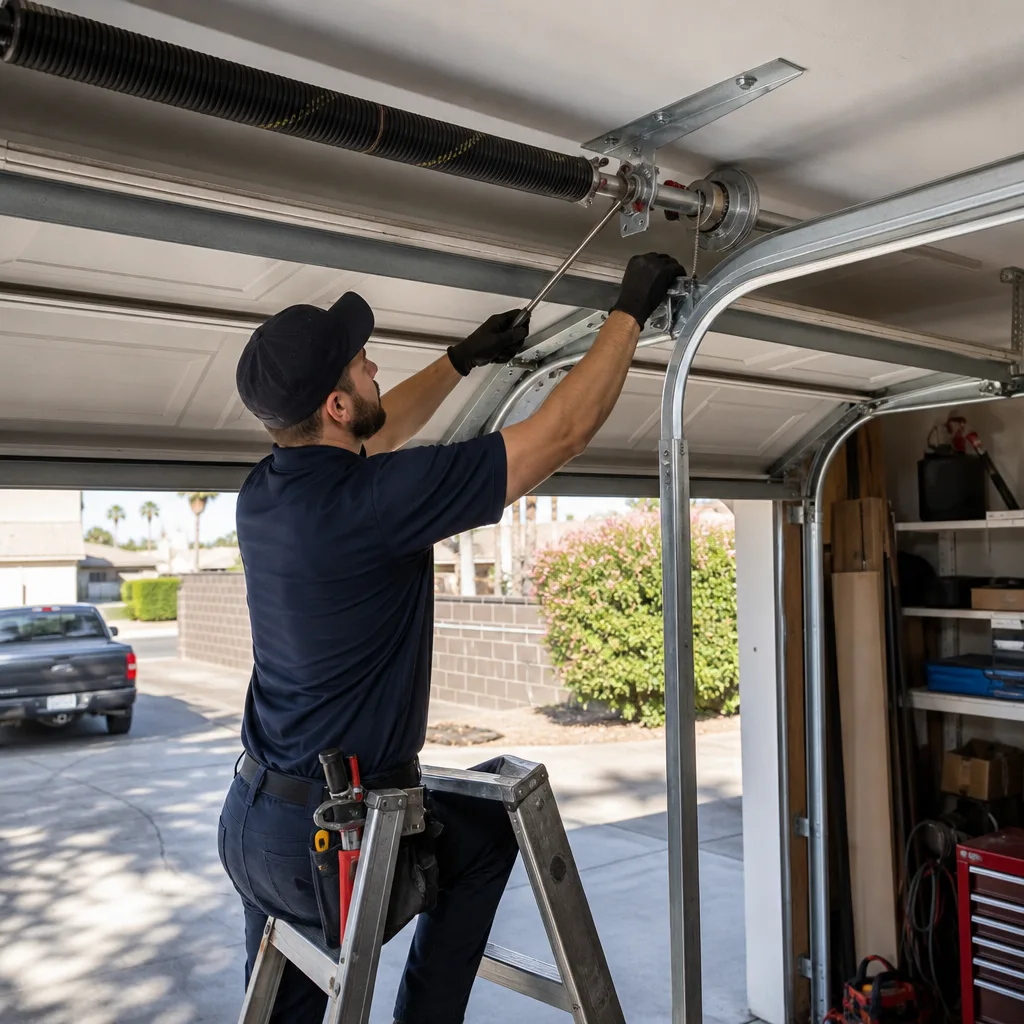 After
AfterGarage Door Cost Breakdown: The Winter Gardens Homeowner’s Reference for 2026
Two quotes for a “standard” 16×7 steel door installation can differ by $400 and still be the same door. The difference is in the spring type, the bracket grade, and whether the installer is betting you won’t look at the parts. What a homeowner in Winter Gardens actually needs is not the lowest bid but the lowest cost per year of ownership, and that number lives in the details most estimates bury. You will leave this guide knowing what a fair 2026 price looks like in our market, where the cheap corners get cut, and why a $80 upgrade today can save you $400 before the next presidential election. For garage door warning signs every Winter Gardens homeowner should watch for, see our companion guide.
Quick Answer
In Winter Gardens, a full garage door replacement in 2026 runs $1,100 to $4,200 installed, with the most common 16×7 steel door landing between $1,400 and $2,100. What separates quotes is rarely the door panel itself. It’s the spring configuration, the bracket grade, the insulation rating, and the warranty cycle count, and those four variables can swing your real five-year cost by $600 or more on two jobs that look identical on paper.
Table of Contents
- Real 2026 Price Ranges for Winter Gardens Door Configurations
- Single vs. Double Torsion Springs: The $80 Decision That Pays for Itself
- What “Lifetime Warranty” Actually Means on a Spring
- How to Read a Line-Item Estimate and Spot the Three Substitution Points
- The Real Cost of a $99 Tune-Up Special
- Figuring Your True Cost Per Year of Ownership
- What Winter Gardens Specifically Does to Garage Door Prices
- Common Mistakes to Avoid
- When to Call a Professional
- Frequently Asked Questions
- The Bottom Line
Real 2026 Price Ranges for Winter Gardens Door Configurations
We quote these five setups more than any others in Winter Gardens, Lakeside, and the unincorporated pockets east of El Cajon. These ranges reflect what we are actually seeing in 2026, installed, with the old door hauled away. They assume a standard 16×7 opening unless noted.
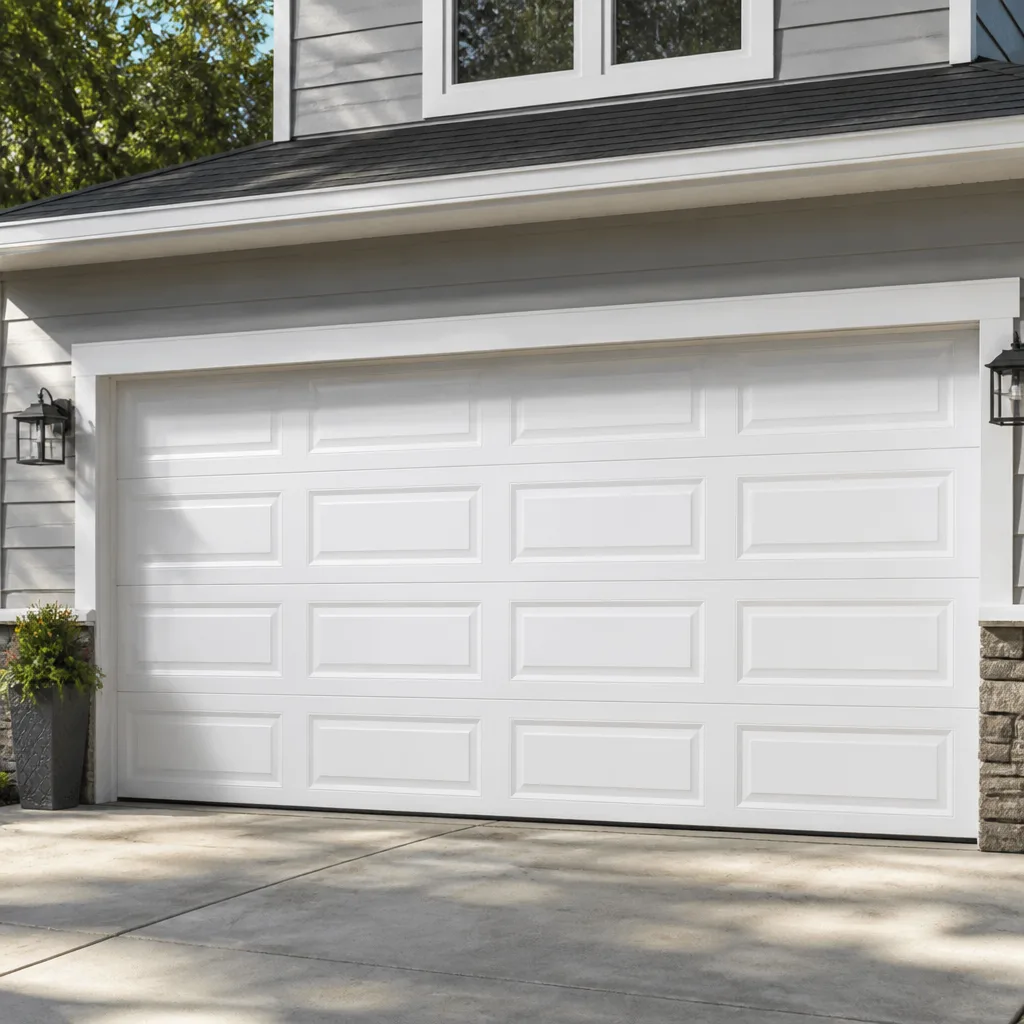
1. Basic Non-Insulated Steel Door, One Row of Windows or None
$1,100 to $1,700 installed. This is the 25-gauge steel door with no insulation value to speak of, a basic rail system, and either no windows or a single row of plain glass. It works fine on a detached garage where the temperature inside does not matter much. The moving parts will wear faster in our summer heat because the tracks expand and contract more than on a heavier, insulated panel that holds its shape. If your garage shares a wall with the house, think hard before going this route, because whatever temperature the garage hits, your kitchen floor feels.
2. Insulated Steel Door, Two Layers, Polystyrene Core
$1,600 to $2,400 installed. This is the workhorse for most Winter Gardens homes built in the 1970s through the 1990s. The panel holds up better to direct afternoon sun on west-facing garages and cuts the garage heat enough that the room above it stays livable in August. The step up in hardware quality here matters more than the insulation number on the label. Better end hinges, a sturdier center bearing plate, and a door that does not flex when the wind off the foothills gusts through. If the quote on this tier seems low, check the hardware section of the estimate. Nine times out of ten, that’s where the corner got cut.
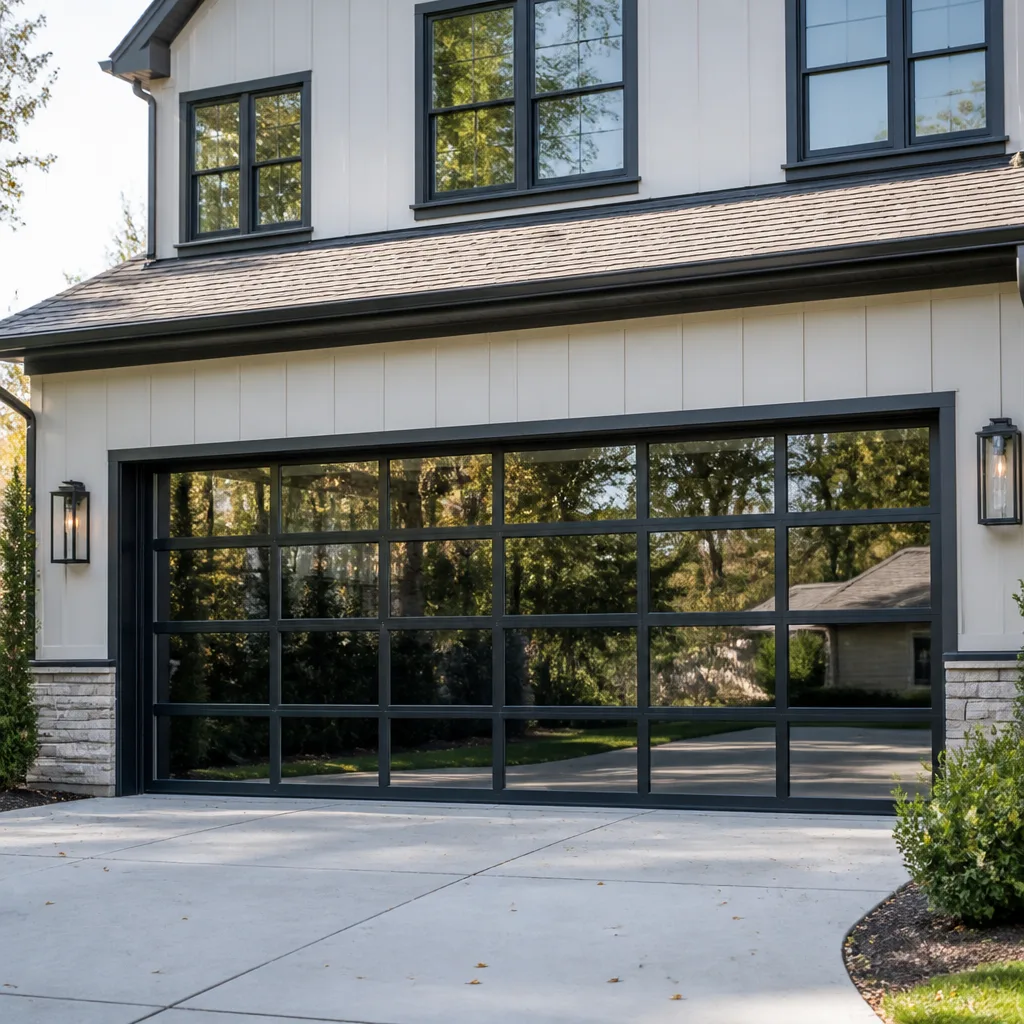
3. Insulated Steel Door, Three Layers, Polyurethane Core, Two Rows of Windows
$2,300 to $3,200 installed. This is what we install most on attached garages in Winter Gardens where the homeowner plans to stay. The three-layer sandwich construction holds its R-value and its flatness for a decade or more. The two rows of windows add roughly $180 to $320 depending on glass type. Insulated glass, not single pane, is the upgrade that actually matters in our microclimate with its fifty-degree overnight swings. Make sure the estimate names the glass package, not just “windows.” That word gets stretched.
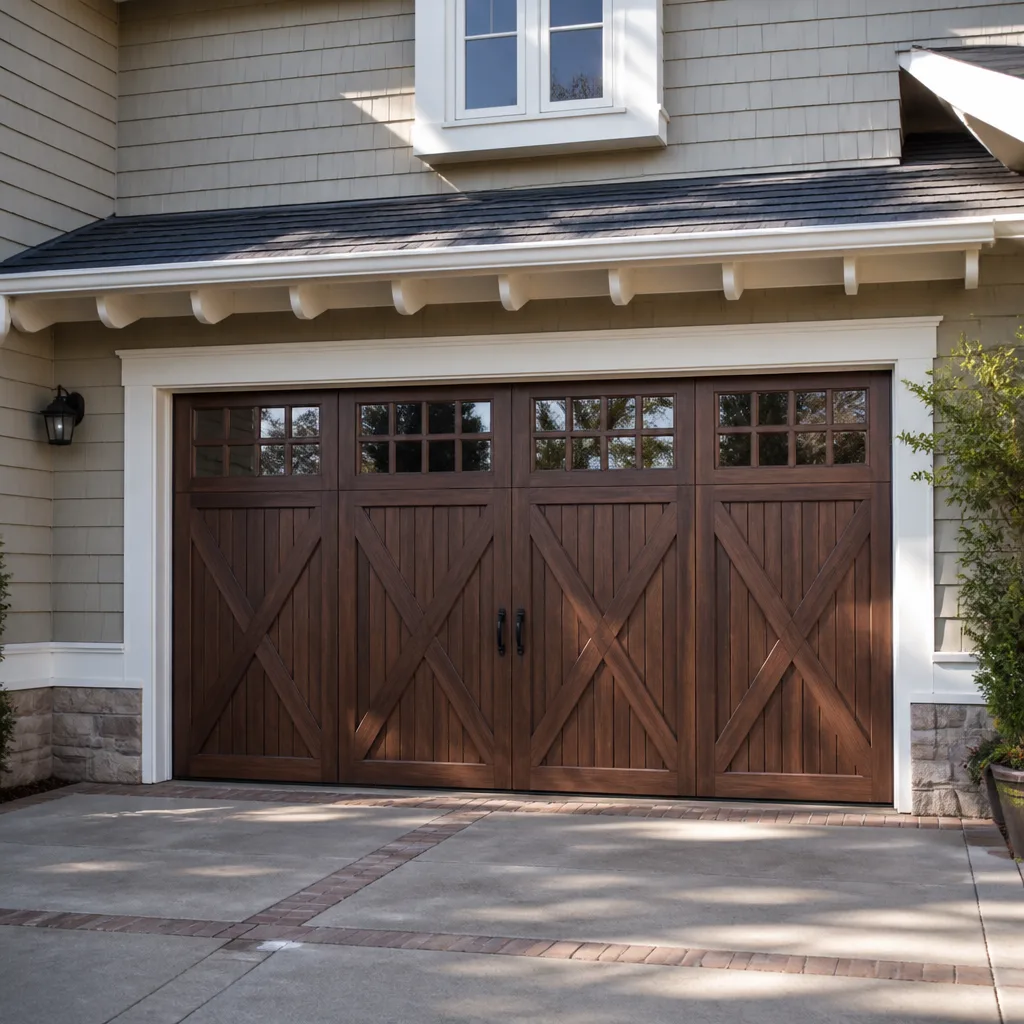
4. Wood Composite or Faux-Wood Steel in a Custom Stain
$2,800 to $4,200 installed. The cost here is the finish, not the function. If the HOA or the street aesthetic calls for a wood look, you pay for it. Composite holds up in the dry heat far better than real wood, which will split in our climate unless you are religious about resealing it. We tell people in Winter Gardens the same thing every time: real wood doors are beautiful for three years and maintenance forever after. Composite gives you the look and lets you spend your Saturdays doing something else.
5. Custom Height or Width, Non-Standard Opening
$1,900 to $4,000 installed, depending on how custom. Some of the older ranch-style homes in Winter Gardens have 7’6″ or 8′ tall openings from a previous door that no longer exists. You will not find a stock door for that without modifying the header. Expect the estimate to include custom track length, panel cutting, and likely a heavier torsion system. This is the category where a second opinion on a written estimate for garage door installation genuinely pays for itself, because custom work is where pricing wildness hides.
Single vs. Double Torsion Springs: The $80 Decision That Pays for Itself
Here is the sentence every Winter Gardens homeowner should hear before signing an estimate: a double torsion spring setup costs about $80 more than a single and it is the best money on the whole ticket.
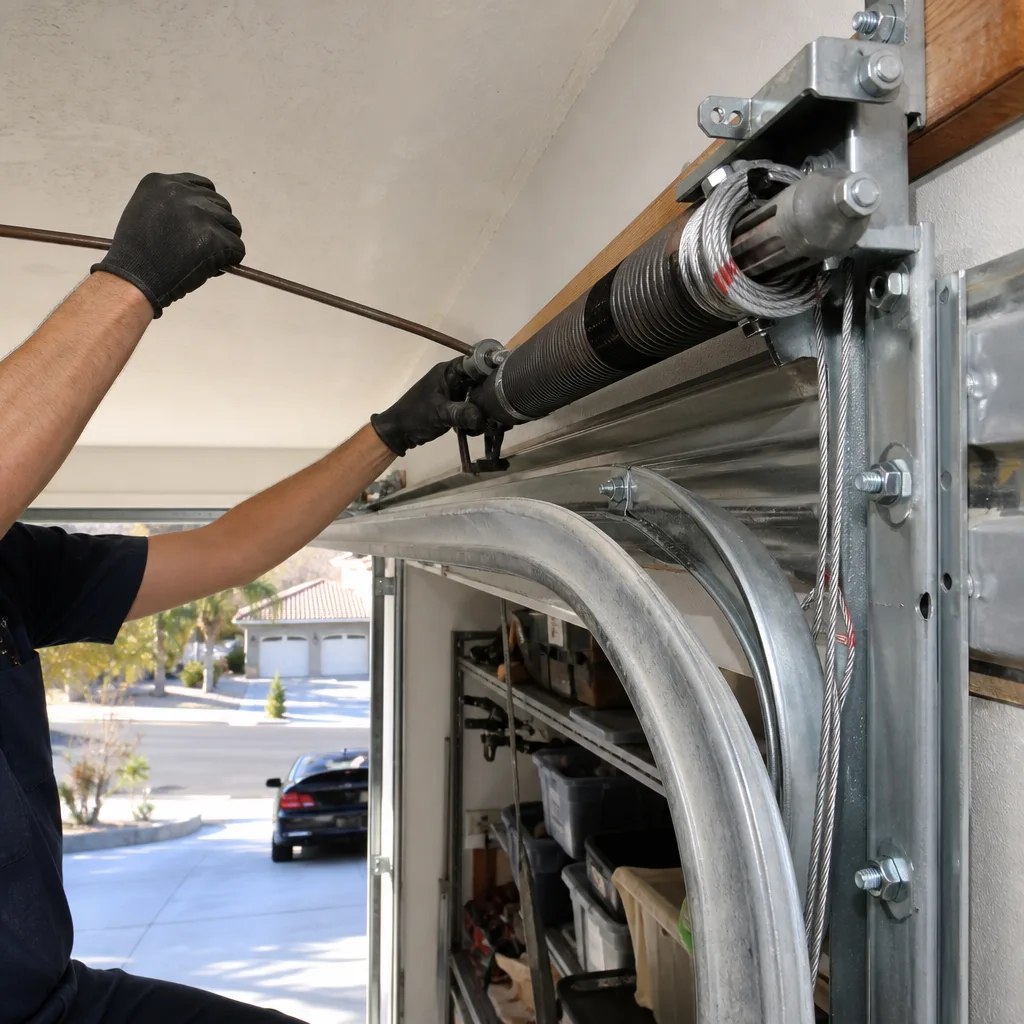
Most doors 16 feet wide and up from the factory are engineered for two springs. Some installers will quote a single high-cycle spring instead and tell you it is equal. It is not. When a single spring snaps, which it will, the door is down. Completely down. Your car is trapped inside and the door cannot be lifted by hand without risking injury, because a 200-pound door with one dead spring is a dead lift. When a double spring setup has one spring snap, the other still carries the load on a shortened cycle life. You can use the opener to get the door up carefully, get your car out, and call for repair on your schedule instead of in a panic at 6:15 on a Monday morning.
We count spring cycles the way you count tire miles. A standard spring is rated around 10,000 cycles. That is about seven to nine years of normal use in a Winter Gardens household where the door opens three or four times a day. A high-cycle spring, oil-tempered or powder-coated, is rated 20,000 to 25,000 cycles. The difference in material cost between the two is maybe $40 per spring. The difference in labor is identical, because it takes the same amount of time to wind either one. So the $80 upgrade is not really an upgrade. It is the price of doing the job the way the manufacturer intended, with the cycle rating that matches how long the rest of the door will last.
If a quote shows “springs, single” on a 16-foot door, ask why. If the answer is anything other than “your door is unusually light and the manufacturer specs a single,” keep looking. This one line on an estimate is the cheapest insurance you will ever buy on a garage door.
What “Lifetime Warranty” Actually Means on a Spring
The word “lifetime” on a garage door spring warranty is doing a lot of quiet work. The real warranty is a number: the cycle count rating. Every torsion spring has one, and most homeowners never see it. The spring is not warrantied for your lifetime or even the door’s lifetime. It is warrantied for a certain number of open-and-close cycles, and if it breaks after that number, it did its job. The warranty was already fulfilled.
A budget brand’s “lifetime warranty” spring is frequently a 10,000-cycle spring dressed up in language. That is the same rating as a standard spring, because 10,000 cycles is roughly seven to nine years in a normal Winter Gardens household. Most people move before that spring breaks, and the warranty never gets tested. Here is the part that matters: the warranty covers the part, not the labor. A broken spring under warranty still means a service call, still means labor, still means your Tuesday is shot. The spring itself, a $60 to $90 part wholesale, is the cheapest thing in the job. What you are actually buying with a good spring is not the warranty. It is not having the job happen twice.
Name-brand manufacturers like LiftMaster and Chamberlain publish their cycle ratings and stand behind them. Their high-cycle springs are honest about what they are. Some budget brands bury the cycle rating so deep you would need a part number and a distributor login to find it. If the estimate says “lifetime warranty spring” and will not tell you the cycle count, you are buying a promise, not a spring.
In our experience, the homeowners in Winter Gardens who get the longest life out of a door are the ones who ask the cycle-count question once and then never think about it again. The ones who chase the word “lifetime” on the invoice are the ones we see twice.
How to Read a Line-Item Estimate and Spot the Three Substitution Points
A garage door estimate is not complicated once you know where the games hide. There are three places where low-bid contractors shave cost without changing the headline number, and all three are on the parts list, not the labor line.
The Three Substitution Points
- The end hinges. A quality 16×7 door has 11-gauge or 12-gauge end hinges on the bottom two sections, where the lift cables attach. Cheap installs use 14-gauge hinges that flex under load and wallow out the holes over time. The door gets louder, the sections start to sag, and the rollers eat the track. The hinge cost difference across the whole door is about $30. If the estimate does not list hinge gauge, ask.
- The rollers. Standard steel rollers with no bearings are fine and last five or six years. Nylon rollers with sealed ball bearings are quieter and last the life of most doors. The upgrade is about $35 to $50 for a full set. The cheap ones are not a safety issue, but they grind, squeak, and wear the hinge barrels. In Winter Gardens, where dust off the foothills works its way into everything, the sealed bearing matters more than it does in wetter climates.
- The cable drums and bearing plate. This is the sneakiest one. The bearing plate is the steel bracket in the center that holds the torsion tube. A standard plate flexes. A reinforced plate does not. The cable drums, which spool the lifting cables, come in cast versions that wear unevenly and machined versions that do not. The difference is maybe $50. When a bearing plate fails, the torsion tube shifts, the door runs crooked, and the repair means unwinding both springs. You pay for that part twice, plus labor, plus the emergency service call. The cheap plate was never cheap.
When you compare two estimates side by side in Winter Gardens, compare the parts lines, not the bottom number. A competent shop will list hinge gauge, roller type, spring cycle rating, and drum material. If the estimate just says “hardware” and a number, that number is hiding something.
The Real Cost of a $99 Tune-Up Special
Let us be honest about what a $99 tune-up is and what it is not. It is a loss leader. No company makes money on $99. The tune-up special exists to get a truck in your driveway and find something to sell you while it is there. That is not automatically a scam. A good technician doing a $99 tune-up will find real problems on a door that has not been touched in eight years. The question is whether the problems were already there or manufactured while the truck was in the driveway.
A $99 tune-up typically includes: lubricating the rollers and hinges, checking the balance, tightening the track bolts, checking the opener force, and inspecting the springs and cables. That is about an hour of work and honestly, it is an hour a homeowner could do a version of themselves with a can of lithium grease and a socket wrench, if they know what to look for and what not to touch.
What the $99 tune-up almost never includes: replacing worn rollers, adjusting spring tension, replacing a stretched drive belt, repairing a frayed cable, or anything that requires taking the door apart. Those are repairs, and they get billed separately. So the question is not whether the $99 tune-up is a good deal. The question is what the all-in cost of the visit becomes when the honest findings get added on.
Here is the comparison that actually matters in Winter Gardens: a full service call from a shop that quotes the whole job up front and stands behind it, versus a $99 entry price that becomes $480 before the truck leaves. The first one sounds more expensive on the phone and usually is not by the time the invoice is settled. We quote every repair before we start, on the phone when we can, and the number does not move when we get there. That is the whole game. The tune-up price is a doorway. The real price is what is on the other side of it.
Figuring Your True Cost Per Year of Ownership
The number a contractor quotes you for a garage door job is the wrong number to evaluate. What you are actually buying is a cost per year, and that number includes the parts grade, the spring cycle rating, the warranty labor terms, and the follow-up service calls that cheap installs almost always require. Here is how to figure it.
- Take the quoted total and divide by the years you expect to own the house. If you are 62 and this is the last door you will ever buy, divide by your expected years there. If you are 55 and might move in five years, divide by five for the selling-value calculation, but know the next owner will ask about the door.
- Add the cost of one emergency spring replacement. A standard single spring on a 16×7 door lasts seven to nine years. The replacement call in Winter Gardens runs $280 to $420 with the service fee, depending on the spring. A double high-cycle setup pushes that replacement out past twelve to fifteen years and often past your ownership. On a single-spring door, budget one replacement inside your window. On a double, budget zero. That is the $600 difference hiding between two identical-looking quotes.
- Add one roller replacement. Steel rollers wear out in five to eight years. Nylon sealed-bearing rollers last fifteen to twenty. The upgrade is $40 up front. The replacement call is $150 to $200 with labor. Do the math once and never do it again.
- Subtract what the door adds to resale. In Winter Gardens, a garage that looks maintained adds curb appeal on a street where half the doors are original to the 1980s. Buyers notice a straight, quiet door. Appraisers do not add a line for it, but buyers feel it during the walkthrough, and feeling is what closes a sale.
The all-in five-year cost of a $1,400 door with cheap hardware and a single 10,000-cycle spring is frequently higher than the all-in five-year cost of a $1,900 door with good hardware and a double high-cycle spring system. The $1,400 door costs $400 in follow-up work inside five years. The $1,900 door costs nothing. The $500 gap on the quote closes to $100 in real cost, and you do not spend two mornings waiting for a repair truck. That is the number to compare.
What Winter Gardens Specifically Does to Garage Door Prices
Garage door pricing is local, and Winter Gardens has its own variables. This is not a generic national price guide. The numbers in this guide come from what we see on actual jobs in this community, and the climate and the housing stock explain most of the spread.
Climate Stress on Hardware
Winter Gardens gets hot, dry summers and enough cool winter nights to put every metal part through a daily expansion cycle. Steel tracks flex. Bolts back out. Hinges in direct afternoon sun on a west-facing garage get baked, and the grease breaks down faster than in coastal neighborhoods twenty miles west. This is why the hardware grade matters more here than the panel color. A door that installs smooth in January will be sloppy by August if the brackets were thin to begin with.
Housing Age and Non-Standard Openings
A large share of the homes in Winter Gardens were built in the 1960s through the 1980s, which means many garages are wider than today’s stock sizes, with headers that were framed for doors no longer manufactured. When we measure a 16-foot opening and find it is actually 16 feet 3 inches because the original door was a custom cut, the job changes. The estimate changes. A contractor who quotes over the phone without measuring is guessing, and the guess gets corrected on the driveway, usually upward.
Dust and Debris
The air here carries fine dust off the foothills, and it finds its way into rollers, hinges, and opener gears. Sealed-bearing nylon rollers are not a luxury upgrade in Winter Gardens. They are the difference between a door that runs quiet for a decade and one that grinds to a stop in five years. If your estimate lists “nylon rollers” without the word “sealed,” ask. It matters here more than anywhere within twenty miles.
The short version: the right garage door for Winter Gardens is an insulated steel panel with a double high-cycle spring, sealed nylon rollers, and hardware thick enough to survive the thermal swings. That setup costs more than the bargain quote and always has. It also still runs quietly in year eight, which the bargain door never does. If you are comparing prices, compare them on that basis. For a broader look at how repair costs break down here, see our page on garage door repair in Winter Gardens.
Common Mistakes to Avoid
- Comparing quotes by the bottom number. Two estimates can be $500 apart and the cheaper one is more expensive after one service call. Compare the parts lines: spring cycle rating, hinge gauge, roller type, bracket grade.
- Accepting “lifetime warranty” without asking for the cycle count. The warranty on a 10,000-cycle spring is over before you are done paying off the water heater. Ask for the number.
- Buying an uninsulated door for an attached garage in Winter Gardens. The heat transfer through that panel will show up in your cooling bill every August, and the noise transfer makes the whole house louder.
- Letting a handyman touch the torsion springs. High-tension springs hold enough stored energy to break a wrist. This is not a YouTube weekend project. A real shop includes the spring winding in the install price and knows how the safety cables route.
- Taking the $99 tune-up and declining the findings. If a technician tells you a roller is seized or a cable is fraying, that is not an upsell. That is a door about to fail at the worst possible moment.
- Skipping the written estimate. In California, a written estimate is your only protection against the price changing at the door. Get it in writing, read the parts lines, and keep it.
- Replacing the door but keeping a 1998 opener. A new door is lighter and balanced differently. An old opener strain can tear up the new door’s top section and void the warranty. The opener decision belongs in the same conversation as the door decision.
When to Call a Professional
Call a professional when the door does not move smoothly, when you hear a bang from the spring line, when the cables look frayed, or when the door hangs crooked in the tracks. Call the same day if the door will not open and your car is inside. Call before you sell if the door looks original to the Reagan administration and you want the curb appeal working for you. And call when you have a written estimate from anyone else and want a second set of eyes on the parts lines before you sign. Garage door opener issues often masquerade as door issues, and vice versa. Otto’s Garage Door offers free estimates in Winter Gardens. Call (619) 935-3793 and a live person answers, often Otto himself.
Frequently Asked Questions
A full replacement in Winter Gardens runs $1,100 to $4,200 installed, with the most common 16×7 insulated steel door landing between $1,600 and $2,400. The spread comes from insulation grade, window count, spring configuration, and hardware quality, not just the panel price. Call (619) 935-3793 for an exact quote on your opening, free of charge.
A double torsion spring setup uses two springs to balance the door instead of one. When one spring in a double setup snaps, the door can still be opened carefully. When a single spring snaps, the door is down completely and your car is trapped. The upgrade costs about $80 and is worth every penny.
A standard 10,000-cycle spring lasts seven to nine years in a typical Winter Gardens household opening the door three or four times daily. A high-cycle 20,000-cycle spring lasts twelve to fifteen years or more, which for many homeowners is longer than they will own the house.
A $99 tune-up is a loss leader that covers lubing, tightening, and a visual inspection. It rarely includes actual repairs, which get billed separately. The relevant question is the all-in cost of the visit, not the entry price. A shop that quotes the whole repair up front often ends up cheaper.
The door panel may be identical, but the hardware is not. Cheap quotes substitute thin hinges, steel rollers without sealed bearings, a single standard spring, and a flimsy bearing plate. Those substitutions are worth about $400 in parts and they cost twice that in follow-up repairs. Read the parts lines.
Yes. We quote on the phone where the job is standard and we hold that number when we arrive. On installs and replacements, we measure first and the written estimate is free. The price is agreed before any work starts, and the 90-Day Done Right Promise is on every invoice. Call (619) 935-3793.
The Bottom Line
Garage door pricing in Winter Gardens rewards the homeowner who reads the parts list. The real comparison is not the quoted total. It is what that total buys per year of quiet, straight, dependable operation. A good door installed with good hardware and a double high-cycle spring costs more on day one and less by year five. The cheap quote always collects its margin on the back end, in service calls and emergency repairs at the worst possible moment. Buy the hardware. Demand the cycle rating. Get the estimate in writing. And find a shop whose name is on the van, because the name on the van is the name on the invoice. That tends to keep everyone honest.
Written by Otto Reinhardt, Owner at Otto’s Garage Door, serving Winter Gardens since 2004.